

Throughout my professional career, first as a clinical psychologist, then family therapist and, ultimately, as advisor to enterprising families, I have been driven by a deep interest in family systems: how they function, how they evolve over time, and why some families are able to facilitate lasting change while others are not.
The reflections that follow are not intended as “absolute truths,” but simply as observations noted through years of conversations, successes, failures, transitions, conflicts, reconciliations, and, above all, the wisdom shared by families themselves.
In sharing these reflections, I have sometimes taken the liberty of using absolute terms such as “always,” “all,” and “nobody.” I do not mean to suggest that these observations are universally true. Rather, I use these terms because they reflect patterns I have encountered so consistently that the exceptions, when they occur, often serve to illuminate the broader pattern.
Culture Takes Precedence Over Structure, Always
The Cambridge English Dictionary defines culture as: “The way of life of a particular people, especially as shown in their ordinary behavior and habits, their attitudes toward each other, and their moral and other beliefs.”
I often use a simpler definition: “The way we do things around here.”
Both definitions point to the same essential idea: culture reflects the shared values, assumptions, expectations, and patterns of behavior that shape how people interact with one another and make decisions together.
In my experience, no matter how thoughtfully designed plans, policies, governance structures, legal agreements, or organizational charts may be, the long-term success of those structures depends on the underlying health of the family system. The family culture ultimately determines whether those structures will be respected, supported, and sustained.
Because I view culture as so central to family enterprise continuity, I am cautious about attributing problems primarily to individual family members or labeling them with various actual or pseudo-diagnostic terms such as “narcissistic,” “toxic,” “dysfunctional,” etc. While such labels may sometimes seem to offer an explanation for difficult family dynamics, they can also do more harm than good.
Under certain circumstances, a focus on individuals or subsystems could be the right approach, but only when frank psychopathology is present, because it can have an outsized impact on people and systems. Such circumstances, however, are relatively rare.
Most often, labeling people or attributing problems to individuals or subsystems runs the risk of polarizing family members and creating “factions” in the family. When one or two family members or subsystems are viewed as the source of the problem, the family runs the risk of fracturing and further intensifying the dysfunction. Labels can also make it easier to locate the problem in someone else and avoid the more difficult possibility that everyone may need to accept some responsibility for change. It’s easy to point fingers and assign blame to individuals. It’s more difficult to appreciate the complexity of the system as a whole and to accept shared responsibility for driving change.
When a family culture is characterized by open communication, transparent decision-making, fair process, appropriate inclusiveness, mutual trust, cohesion, and respect, families tend to flourish. When those qualities are absent, even well-designed structures often struggle to survive, and long-term continuity can be placed at risk.
Thus, continuity is enhanced by developing strategies that seek family alignment around a set of cultural enhancement goals, specific aspirations for strengthening the way the family communicates, makes decisions, manages differences, and works together. These goals rally family members toward the objective of enhancing overall family culture. This is a process that benefits from long-term commitment and is tailored to the specific situation of the family in question. When done well, cultural enhancement itself can become integral to the family culture and be relied upon to manage future challenges.
Nobody Really Wants to Change
Early in my career, my supervisor, the psychologist Arnold Lazarus, assured me that nobody in therapy really wants to change: “What they want,” he said, “is to feel better.” I have learned that a similar perspective may be cast upon the work of family enterprise: Nobody really wants a family council or a board or an estate plan, or other structures that we create. Rather, what people want is something at a deeper level, including to feel:
- secure
- peaceful
- relevant
- productive
- independent
- competent
- admired
- understood
- and, perhaps most importantly, loved.
The structures we create are tactics that, hopefully, serve a higher purpose in furthering family and individual family members’ goals. I have often found it important to remind myself of this — and to remind my client families — that bare structures or change efforts without meaning or connection to the people involved are just that: bare structures that may not survive over time. When new structures are introduced or when an effort is undertaken to enhance family enterprise culture, it’s important that all parties understand and appreciate how they will be touched by these changes.
All Families Are Conflict Avoidant
I’ve heard many enterprising families described by family members, advisors, and others as “conflict avoidant” and, indeed, I have observed many client families where avoidance of difficult issues has resulted in unresolved tensions, challenging work environments, and in the saddest of cases, frank family fracture.
However, conflict avoidance is not uniformly or necessarily always a prescription for defeat. The anthropologist Gregory Bateson wrote at length about the self-regulating function of family systems. He borrowed the term “homeostasis” from physiology where it refers to the body’s tendency, via feedback mechanisms, to keep internal conditions such as temperature, blood pressure, and blood sugar within a narrow range. With respect to family dynamics, he used the term to describe a family’s tendency to maintain a stable pattern of relationships — even when those patterns seem to be dysfunctional.
This natural tendency to seek stability is why I say that all families are conflict avoidant: it’s an expression of normal family dynamics. Sometimes conflict avoidance is helpful because it allows a family to move forward with important tasks at hand. At other times, conflict avoidance is less helpful because it results in unresolved tensions that undermine good will and effective processes.
I’ve learned that a key challenge as an advisor to enterprising families is discerning when the tendency to seek stability is functional and when it is not. Sometimes it’s best to “let sleeping dogs lie” and get on with the work of the family because getting on with that work allows tensions to subside and perspectives to shift (“Maybe my brother-in-law is not such a bad guy!”).
I’ve seen this to be most helpful when families are aligned around establishing new governance structures or policies with clearly defined goals, roles, and responsibilities. At these times, working together successfully can be the elixir that leads to family-wide healing.
Some families, therefore, heal not because they first resolved every emotional issue, but because they successfully worked together toward shared goals. Establishing governance structures, clarifying roles, and creating fair decision-making processes sometimes become the very experiences that rebuild trust and repair relationships.
It’s The “Stuff” You Don’t Talk About That Has the Most Impact in Family Relationships
But I’ve also seen conflict avoidance keep a family from addressing key issues that undermine their continuity plans and, in some cases, lead to schisms and cut-offs. When resentments have been built for years, sometimes across generations, or when perceived hurts have never been recognized or forgiven, what is unspoken does not disappear – it gets acted out in interactions with the involved parties. In these moments, I have found the principle that the “stuff” you don’t talk about has the most impact in family relationships.
As Carl Jung observed, everyone has a “shadow” — that part of ourselves that is not easily acknowledged but can exert a powerful influence in our lives. I’ve observed that when working with a family has felt “stuck” — for example, when plans were not implemented, policies were not followed, or communication was unproductive — it’s been helpful to advance and support efforts to uncover what is not being talked about.
This has not simply been “getting things off one’s chest.” Instead, it has been more about helping to establish a safe communication culture that allowed the responsible expression of uncomfortable thoughts and feelings, real listening, a commitment to shared outcomes, and people given the benefit of the doubt.
All Families Naturally Grow Apart
Almost every family I have worked with has faced the threefold risk of increased diversity, dispersion, and complexity. As generations expand, family members pursue different objectives, partner with people from different backgrounds, relocate across the world, and develop increasingly diverse perspectives.
Jay Hughes has described this phenomenon through the lens of entropy, the tendency of systems to drift toward disorder unless energy is continually invested to maintain them.
Left entirely to natural forces, families tend to become less connected over time — not because relationships fail, but because diversity, dispersion, and complexity steadily increase. Sometimes it happens so gradually that it’s hardly noticed until a crisis looms.
As the number of family members grows, shared experiences become less common, and perspectives and values may become more varied. The principles, stories, struggles, and sacrifices that once united a founding generation become increasingly distant for siblings, cousins, grandchildren, and great-grandchildren. Continuity is never automatic. It requires energy.
It seems like a simple observation, but I have found it valuable to point out to families that stability, alignment, and cohesion require energy invested in the things that keep families together, such as conducting family meetings, enhancing communication, providing education, and ensuring family members have options for responsible roles and engagement.
Families naturally grow apart. Flourishing families intentionally grow together.
All Enterprising Families Must Seek a Balance Between Freedom and Obligation
The tension between belonging and freedom lies at the heart of many psychological and family-systems dynamics, and in my experience, this is especially pronounced in families of wealth or shared ownership, where the “freedom” of the individual is often inseparable from the collective.
When I’ve asked wealth creators about the greatest gift that their wealth could provide, the answer I often hear is “freedom.” Freedom to choose, to pursue a life that’s consistent with one’s interests and talents, freedom to contribute in unique and beneficial ways to the outside world.
But paradoxically, belonging to, or ownership in, a family enterprise often constrains freedom. That’s because along with “belonging,” may come a slew of expectations and obligations. For example: participation in family governance, attending educational activities, partnering with family members who may or may not be choice partners, submitting to a family-wide investment strategy, and so on.
I have seen this tension between belonging to the collective and the expression and experience of personal freedom give rise to challenging individual and family dynamics in enterprising families:
- Cousins who barely spoke to each other but shared ownership in a business, as beneficiaries of trusts created by the business’ founders.
- An adult child who was desperately unhappy working in his family’s business but felt obligated to do so because that was his only option for retaining ownership passed to him by his grandparents.
- A married couple who were expected to submit to routine surprise inspections of their home by family members because the house was purchased by parents and that was the “cost” of this gift.
These circumstances raise important questions: What is truly mine? What rights do I have over these assets? What must I share and what/when must I give up certain rights to remain part of this collective?
I have found that families who thoughtfully consider these questions; who acknowledge that there may be tensions around the “tyranny of the gift”; who seek to clarify “What is Yours, Mine and Ours”; and who intentionally address the balance between individual rights and collective obligations, make a good start toward resolving these tensions.
En conclusión
Over these past 25 years, having had the opportunity to work with many flourishing families, I have come to admire deeply those people who have taken on the difficult challenge of building a successful enterprise, adapting their culture to inevitable change, and developing individual human beings who remain true to themselves while committed to the families of which they are part.
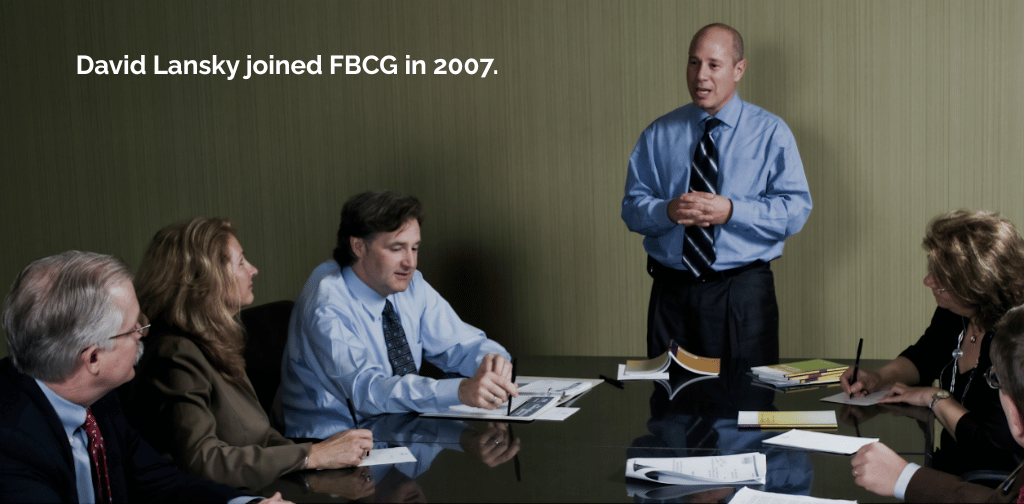
David Lansky has played a key role in the growth and transformation of many enterprising families, and in the business interests which they share. In 2025, he was awarded the Richard Beckhard Award by the Family Firm Institute for outstanding contributions to the field.
October 1, 2026