
Wherever people share ownership of something valuable — a work project, house, business — they eventually face the same set of questions: What does it really mean to collectively own the entire asset, and when is that differentiated from owning just a portion? What are the collective and individual benefits, roles, rights, and responsibilities? How do those rules of engagement remain relevant and up-to-date throughout the life cycle of the collective asset and the individual?
These aren’t new questions. Shared ownership has required agreed-upon rules for as long as humans have organized themselves into families, communities, and enterprises. Some of the clearest thinking on the rewards and tensions between individual interest and collective good comes from fables passed down across generations.
To illustrate the “why” of owner agreements, consider the story of Gauri.
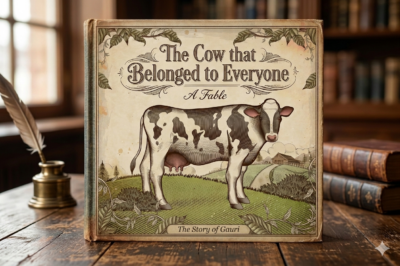
The Cow That Belonged to Everyone
A terrible drought had taken hold in a small village. No rain had fallen for months, the crops had withered, and the well had run dry. Amidst this despair, there was one beacon of hope: a gentle cow named Gauri. She was not the property of any single family but belonged to the entire village. Though her food was scarce, Gauri still gave a small amount of milk each day.
When the villagers gathered to decide what to do with the limited milk, the conversation grew heated. A young man insisted that his children must be fed first because they were the future. An elderly couple countered that they deserved priority in recognition of their role in building and sustaining the village. Fearing the milk would run out, others argued it should be divided equally by family, even if some households were larger than others.
Then a wise old man stepped forward. “We have forgotten that Gauri belongs to all of us,” he said. “Her milk is not for one group, but for the entire village. If we fight over her milk, we will lose sight of what matters: keeping her alive and healthy so she can continue to give.”
The crowd went still. The question shifted from How do I get my share? to How do we preserve the source of our collective survival?
Inspired by this unity, the villagers didn’t just agree to “be nice; ” they negotiated a set of rules to keep the spirit of their goal alive as the drought persisted. They realized that simply drinking the milk each day was shortsighted. They agreed to delay consumption, take on additional work, and process it into cheese and yogurt, which would last longer and provide more sustained nourishment. This required a plan in which everyone participated — not just by receiving, but by adjusting their role and expectations, then working together to preserve the food.
Gauri remained healthy, the food stretched, and the village endured until the rains finally fell.
Why This Story Matters for Ownership Groups
Every family that shares ownership of a business faces a version of this moment. When the focus stays on What’s in it for me? — my dividends, my role, my liquidity — the conversation stalls in competing claims. An owner agreement works the way the wise old man’s words did: it shifts the focus from individual claims to the shared goal, creating clarity and co-ownership alignment.
But that unity is only the beginning. Like the villagers, owners must then negotiate the rules of engagement, including how resources are allocated, what’s expected of each owner, and how decisions get made. As conditions change, those rules need to be renegotiated as an ongoing process of preserving the source of collective success.
Outgrowing the Unwritten Rules
In the early stages of a family business, the owners work shoulder to shoulder, driven by risk and passion. Rules of engagement are based on survival and proof of concept, and those unwritten, “handshake” rules are clear and functional — forged in the crucible of shared effort and a desire for mutual success. They grow out of centralized control and define the roles, rights, and responsibilities of joint owners at any given time.
As with Gauri, the forces that pull owners together will run their course and become outdated at the same time the village is growing and control becomes more decentralized. The rules of engagement that grew out of those earlier times no longer fit, and the entire system must be renegotiated as part of a natural evolution.
What was once clearly an environment of co-ownership may now be better described as share ownership, with new and varying roles for owners. The village co-owned Gauri and shared in her care, but the cheese and yogurt she made possible could be managed and owned under a different set of rules entirely. The control, decision-making, sharing of work effort, financial risk, and rewards may all have evolved. Those new rules of engagement must then be acknowledged and communicated to the rest of the villagers so that individual owners are clear on their new rights, responsibilities, freedoms, and financial benefits.
The Generational Evolution of the Miller Family Business Documents
The Miller family will be used to illustrate how, in modern times, the rules of engagement are reflected in one or more ownership-defining agreements and documents that evolve from a handshake, or reliance on governing laws, to shareholder agreements, operating agreements, and buy-sell agreements.
In each generation, the Millers evolved from needing the most basic form of business documents to a more comprehensive set to address their changing systems. By adapting their rules of engagement, the Millers protect the collective survival while acknowledging the freedom of the individual. Failing to update these documents would be like the villagers fighting over Gauri’s milk during the drought.
Phase 1: The Founders & Their Children (The “Gauri” Phase)

The Context: Jack and Sarah started an apple orchard with their three children. Everyone worked “shoulder to shoulder,” driven by the immediate need for survival and proof of concept.
The Documents: A simple, one-page handshake memo and an incorporation filing with the Secretary of State.
The Rules of Engagement: “We all work, we all eat.” Like the villagers with Gauri, the rules were unwritten but clear because the goal was collective survival. There was no need for a buyout formula because no one could imagine leaving, and someone’s departure may have meant the end of the key contributor.
Phase 2: The Sibling Partnership (The “Processing” Phase)

The Context: The three siblings now run the business. To add value, they begin processing apples into cider and pies, similar to the villagers turning milk into cheese for long-term nourishment.
The Building Block Documents: Basic operating agreement (part of the operating business corporate structure); one-page ownership alignment document (vision, goals, and shared purpose); and compensation guidelines or agreement.
The Rules of Engagement: The basic operating documents now define owners’ roles and rights, such as who manages the harvest versus who manages the finances, and at what decision threshold an operator needs to involve the others. This document also introduces a basic buy-sell agreement to address any permitted entry and exit of owners, as well as triggering events such as a sibling’s potential death or disability.
Two additional documents that benefit sibling partnerships include an ownership alignment document, which could be a simple one-page document fostering financial and non-financial alignment, and an agreement establishing compensation guidelines.
Phase 3: The Cousin Consortium (The “Share Owner” Phase)

The Context: The business has moved from three siblings to seven cousin owners with different levels of roles and responsibilities. Some cousins work in the orchard, while others are passive investor owners who live out of state.
Expanding Roles and Rights Documents: The comprehensive shareholder agreement serves to support ownership alignment and sound decision-making and governance by specifically clarifying the authority and boundaries related to owners as operators, active and engaged non-employee owners, and passive investor owners. Defining ownership may include the delegation of voting or control to other owners or to an elected board of directors.
The Rules of Engagement: The focus shifts to the need for clarity of individual rights to support the collective good.
The documents must now answer many important questions, such as:
- Decision Making: How do the seven cousins vote to resolve an impasse? How are votes counted? Do owners want to establish an owners’ council or board of directors to facilitate decision making?
- Valuation: How is a share valued if a non-active cousin wants to be bought out?
- Reinvestment and Distributions: How much profit is reinvested in the orchard versus distributed to help cousins meet their own financial obligations?
The Questions Shareholders Must Answer
Like the villagers, shareholders must answer specific questions to create a durable agreement:
- What do we own and who are the current owners?
- What are our roles and rights as owners? Identify when owners have input and decision-making power and how operating, financial, and stewardship decisions are made.
- How is ownership transferred? This includes triggering events the Exit Planning Institute refers to as the five Ds: Death, Disability, Divorce, Distress (or Disaster), and Disagreement (or Dissolution).
- How is a share valued? Whether through fair market value, formulas, or income approaches, a clear process must be defined.
- How do we make decisions? Agreements must define voting rights and how to resolve an impasse or deadlock.
- How do we distribute or use profits or cash? Rules must be set for harvesting wealth and meeting financial obligations if the company needs capital.
Is Your Gauri Still Healthy?
The rules of engagement — the collection of complex documents — define the building blocks of a cohesive family business system. Owners should periodically ensure they understand how those documents’ provisions balance collective and individual rights. Families should dedicate time every few years to review their agreements and confirm they will lead to the outcomes owners desire and anticipate.
Do your agreements help you align the voice of ownership? Do they clearly define the collective obligations of ownership while protecting the freedom of the individual? Do they empower you as owners to take responsibility for stewardship of the collective while understanding your individual rights and benefits?
The focus on rules of engagement supports the long-term health of the business by preventing misalignment between the collective and the individual, ensuring that your “Gauri” continues to sustain the family for generations to come.
Additional Resources
Family Businesses Need Legal Documents that Go Beyond Estate Plans
Family businesses often outgrow their existing legal documents, operating with advice and agreements that are a generation or more out of date and no longer fit the current needs of the business or its owners. A team approach that balances legal advice, financial planning, business governance, and family dynamics is essential to creating documents that protect both the enterprise and the interests of all owners across generations.
Paper Trails: A No-nonsense Guide to Essential Documents for Family Business
The most successful multigenerational enterprising families and family offices utilize a variety of operational descriptions or “moral” agreements as the means to manage the complexity of having family and business mixed together. The intention is not to add bureaucracy but to add organization and clarity so that family members of all ages can better understand the system they are a part of.
About the Authors

Robert DeAngelis is a consultant at The Family Business Consulting Group, with a wealth of knowledge in guiding businesses through complex legal and fiduciary matters. He specializes in strategic planning, which plays a crucial role in mapping out the future of businesses, including leadership and ownership transitions.

Amy Wirtz is a senior consultant with The Family Business Consulting Group, passionate about helping families develop and define their purpose. She works closely with families to identify their goals around values, ownership, and financial wealth. To support these goals, Amy helps families establish family offices, family councils, and enterprise governance systems.
March 6, 2026